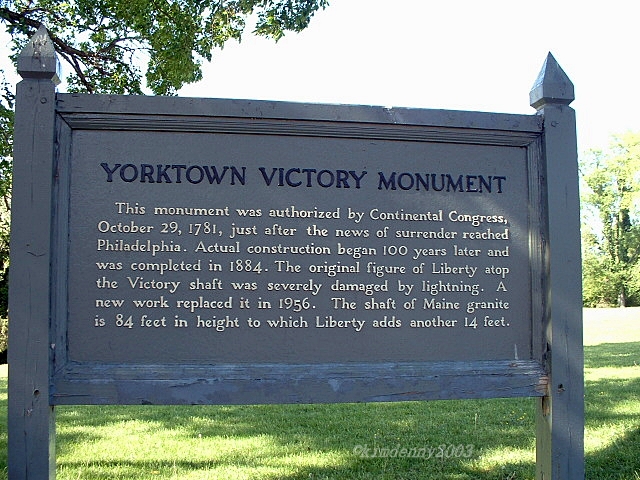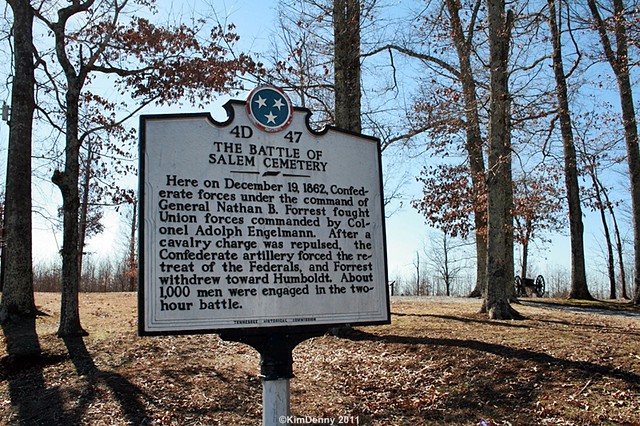
Southeast of Jackson, Tennessee, skirmishes between December 11, 1862 and January 1, 1863 between Nathan Bedford Forrest's cavalry and Union forces took place around this area.
Showing posts with label battle. Show all posts
Saturday, December 19, 2015
Wednesday, December 16, 2015
Battle of Nashville Dec 16, 1864
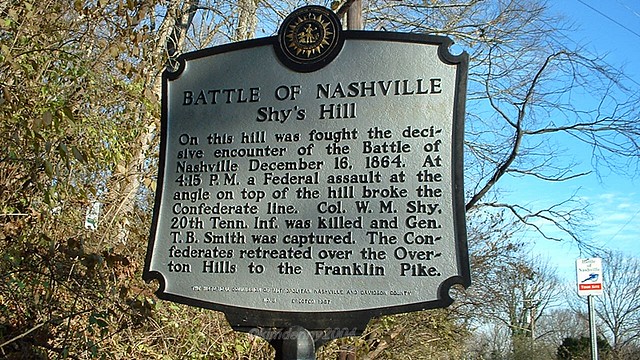
December 16, 1862 was the second day of the Battle of Nashville. The Confederate troops were entrenched on what would be called Shy's Hill and east to the Peach Orchard Hill. The attack began in earnest late in the afternoon. Eventually, the Union forces overtook Shy's Hill and Hood would be forced to retreat south along the Franklin Pike and Granny White Pike. Union cavalry would pursue, but lacking supplies, and being bested in numerous skirmishes along the Franklin Pike, would slow the pursuit. Eventually they were confronted by Confederate Cavalry General Nathan Bedford Forrest just north of Columbia, the pursuit was halted. They attempted to send troops on trains to Chattanooga but they arrived too late and Hood was able to escape to Mississippi.
Tuesday, December 15, 2015
Battle of Nashville Dec 15, 1864
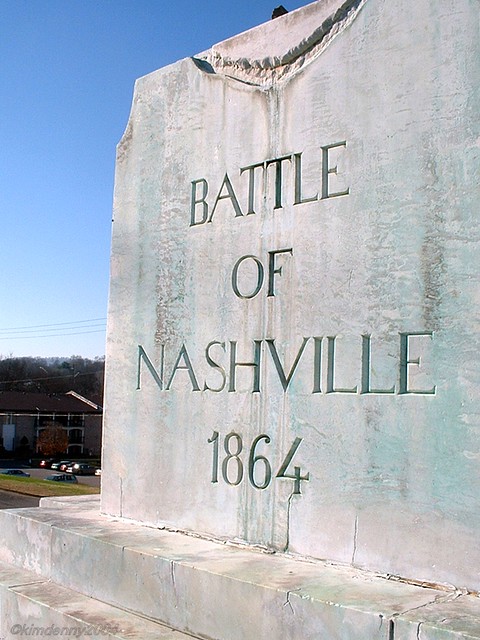
On December 15, 1864, Confederate General John Bell Hood's forces were lined up in an arc around the south end of Nashville. The battle began with an attempt to launch a diversion on the far right of the Confederate's line at Granberry's Lunette and then attack full on the left flank. The diversion did not work as the Confederates were ready. However the Union forces were able to overrun most of the positions on the left and capture the redoubts of the Confederates. The South pulled back and reinforced their line of battle along current Harding Place/Battery Lane at Peach Orchard and Shy's Hills, between the Hillsboro Pike and the railroad.
Monday, December 14, 2015
Battle of Nashville-Kelley's Point
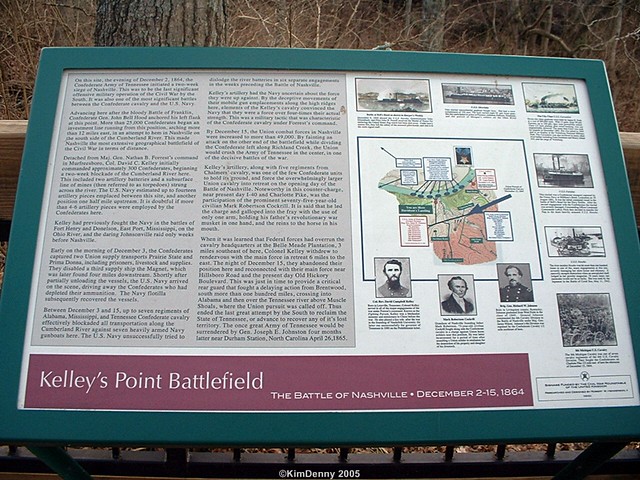
After the horrific losses in Franklin, Tennessee, Confederate General John Bell Hood followed the Union troops north towards Nashville. A line was established south of Nashville, from the Cumberland River on the west for 12 miles around to the Chattanooga Railroad tracks. This was the largest battlefield geographically in the Civil War. On December 2, 1864, the Confederates set up two artillery batteries at this point, now known as Kelley's Point, as well as a string of mines under the river in order to blockade the Cumberland and keep Union ships from reaching Nashville.
Sunday, December 13, 2015
Battle of Fredericksburg, Virginia
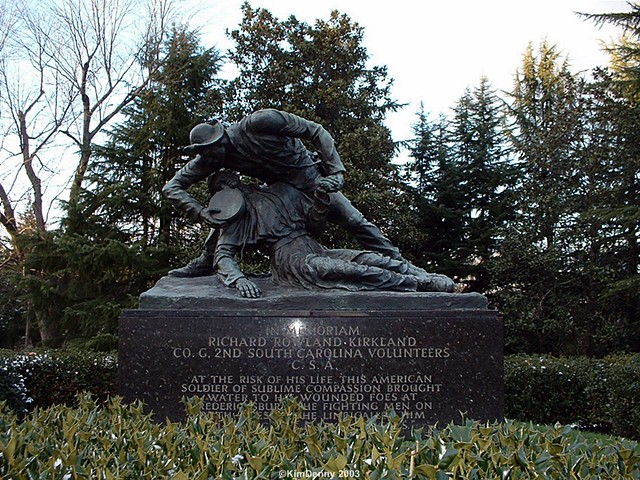
Over the days of December 11th to the 15th in 1862, the Battle of Fredericksburg was fought in Virginia. The Confederate Army led by General Robert E Lee were entrenched along a sunken road upon Marye's Heights above the town. In the first days, the Union Army, led by General Ambrose Burnside, made their way across the Rappahanock River on pontoons and in boats. Once they arrived in the small town they were met with building by building skirmishing.
Tuesday, December 1, 2015
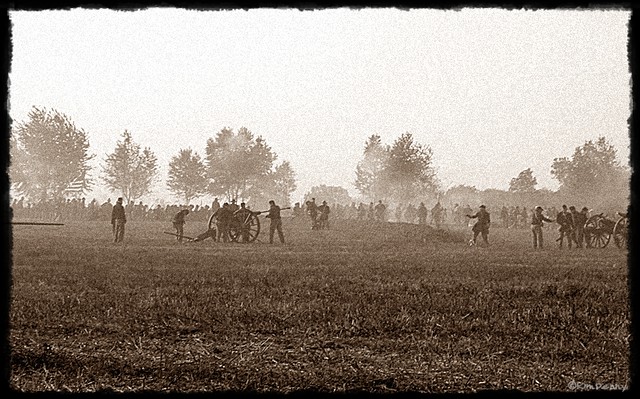
Aftermath of the Battle of Franklin
Six Confederate generals were dead. The Union army had left Franklin and were headed to join the regiments who were already situated in Nashville, about 20 miles north. The Federals had not lost as many men, but those wounded were left behind. Confederate General John Bell Hood would foolishly pursue them to Nashville where his Army of Tennessee would be devastated on December 15th and 16th.
Monday, November 30, 2015
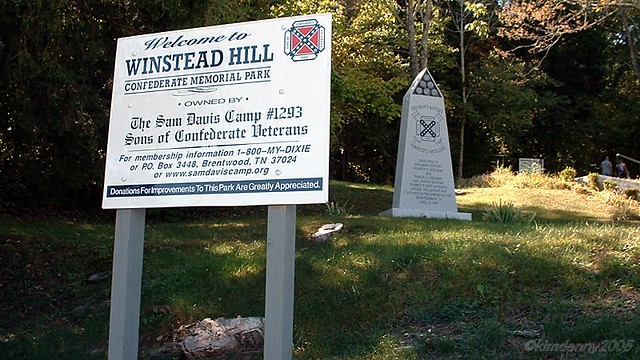
November 30, 1864 Battle of Franklin
After the Union troops slipped past General John Bell Hood's Confederate forces camped at Spring Hill, Tennessee the night before, they began building entrenchments at Franklin. Their main line of defense was built across the Columbia Pike and at the home of Fountain Branch Carter. As Hood watched from Winstead Hill south of Franklin, he ordered his men at nearly dusk to charge into the Federal earthworks repeatedly.
Sunday, November 29, 2015
Nov 29, 1864 Battle of Spring Hill
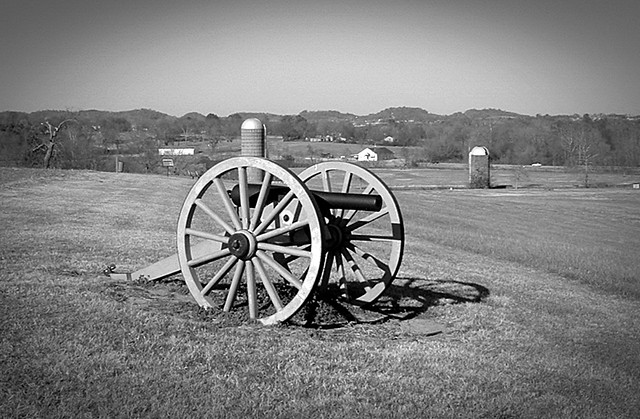
On November 29, 1864, Union and Confederate forces skirmished at the small town of Spring Hill, Tennessee. Spring Hill is located on the border of Maury and Williamson Counties, about halfway between Columbia and Franklin. Confederate General John Bell Hood set up his forces to attempt to stop the Federals as they left Columbia, heading north. There were minor skirmishes along the Columbia Pike, and the Federals lined up west of the pike in order to protect the railroad. Casualties numbered only in the few hundred.
Wednesday, November 4, 2015
On This Day 1864: Battle of Johnsonville
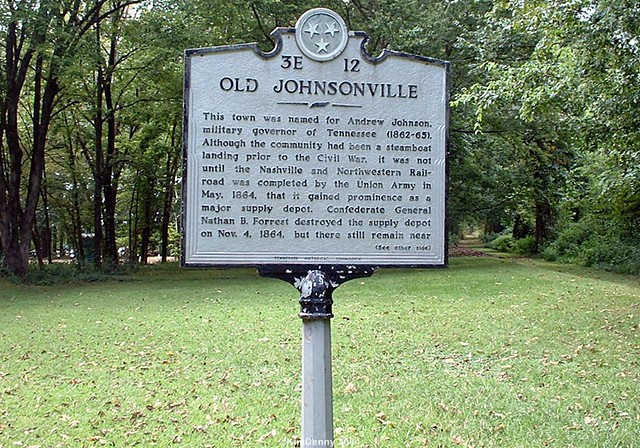
On this day in 1864 was the Battle of Johnsonville, Tennessee, in the Civil War.
~~Old Johnsonville(quoted from historical marker)~~
Thursday, October 22, 2015
The Fallen
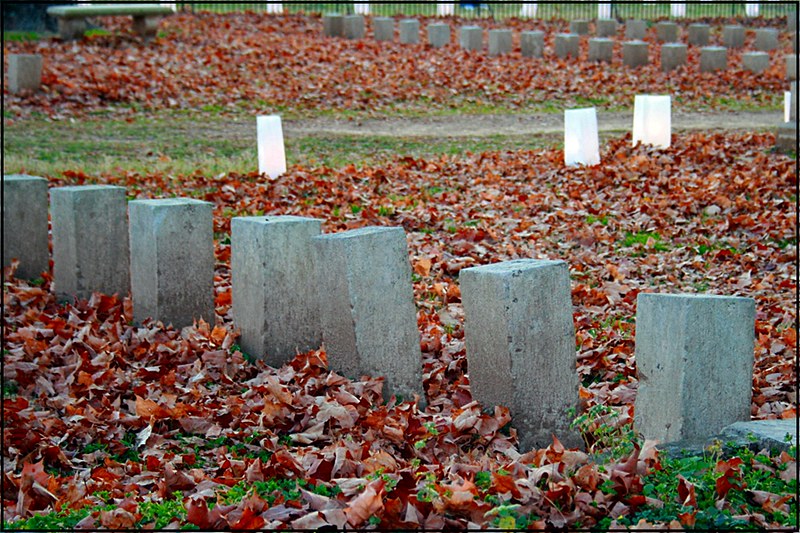
Fallen soldiers. Fallen leaves. Carnton Plantation, Franklin, Tennessee. Graves of unknown Confederate soldiers from the Battle of Franklin, November 1864.
Monday, October 19, 2015
October 19th, America's True Independence Day
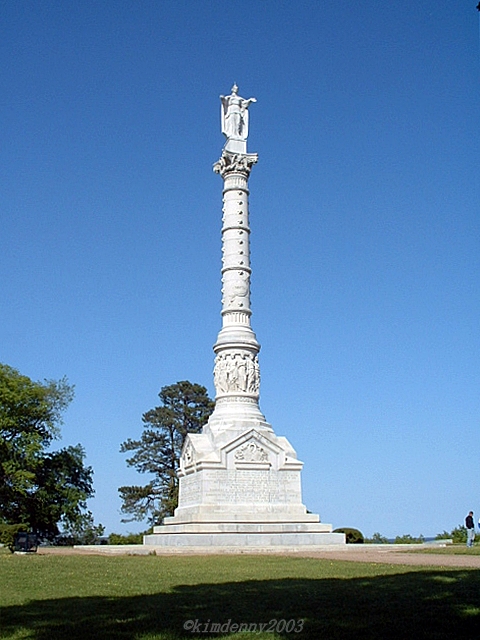
Americans in the United States celebrate the Fourth of July every year as Independence Day. But perhaps we should be celebrating on October 19th as well. On this date, in 1781, at a small fishing town in Virginia, the articles of capitulation(surrender) were signed. Inside a farm house owned by Augustine Moore, British Lieutenant General Cornwallis surrendered to future president and commander of American forces, George Washington. Also present and signing the articles were Captain Thomas Symonds, British Navy, and Rochambeau, French commander who had assisted Washington in the final years of the war.
Tuesday, May 4, 2010
Tuesday's Battle

Tuesday is named for Tyr, the Norse God of War. I believe it is fitting to show photos from the various battlegrounds, mostly Civil War, that I visit.
This is Appomattox Court House, Virginia. Despite what may be perceived by many people, this is not actually the "court house". And to be factual, this isn't completely the actual house where General Robert E Lee signed terms of surrender to General Ulysses S Grant on April 9, 1865, either-it is mostly a reproduction.
The town of Appomattox is located a few miles from here, in the county of Appomattox. The old court house(now reconstructed at the National Park) was located at this town, which was called Clover Hill. The town of Appomattox, a few miles away, is the location of the current county court house. The county seat was moved when a train station was built in 1854 at Appomattox Station. The Civil War culminated at this place, Clover Hill, in April of 1865 after several days of fighting.
This home, the McLean home, was where both sides met to draw up the formal agreement to end the war. After the war, the home was sold a few times. One owner wanted to move it to Chicago for the 1893 World's Fair, but it never happened. Then they decided to move it to Washington DC and put it on display. The house was taken apart and readied to be moved, but that idea fell through as well. The home then lay in piles for nearly fifty years. Environment as well as thieves and collectors took their toll on the home. It wasn't until 1940 that the National Park was created and the home was to be rebuilt. About 5000 of the original bricks were able to be used, but much of the wood had to be replaced. It was opened to the public on April 9, 1949.
We visited the park in March of 2006.
Tuesday, April 27, 2010
Tuesday's Battle

Tuesday is named for Tyr, the Norse God of War. I believe it is fitting to show photos from the various battlegrounds, mostly Civil War, that I visit.
Today we visit the Stone's River National Battlefield Park, specifically the Hazen's Brigade Monument and Cemetery. Built just a few months after the battle in 1863 to honor those in the brigade of General William Babcock Hazen, men from the 110th Illinois, 9th Indiana, 6th Kentucky and 41st Ohio. They held this area throughout the Battle of Stones River on December 31, 1862. Buried here around the monument are 45 of the men from the unit who fell in battle. The monument has inscriptions on all four faces, including a memorial to 6 officers of these units who were killed at Shiloh in April of 1862.
This photo was taken after a snowfall in February of this year.
Tuesday, April 20, 2010
Tuesday's Battle

Tuesday is named for Tyr, the Norse God of War. I believe it is fitting to show photos from the various battlegrounds, mostly Civil War, that I visit.
Today's photo is from Manassas National Battlefield Park. The monument is of General Thomas "Stonewall" Jackson, who supposedly earned his famous nickname here. It is near the park's visitor center, and in roughly the area where the First Virginia began their attack on Union forces. The artist is Joseph P Pollia and was dedicated at the park in 1940. Some folks call this the "Superman" monument. I can see why. It's one of my very favorites.
Subscribe to:
Posts (Atom)